
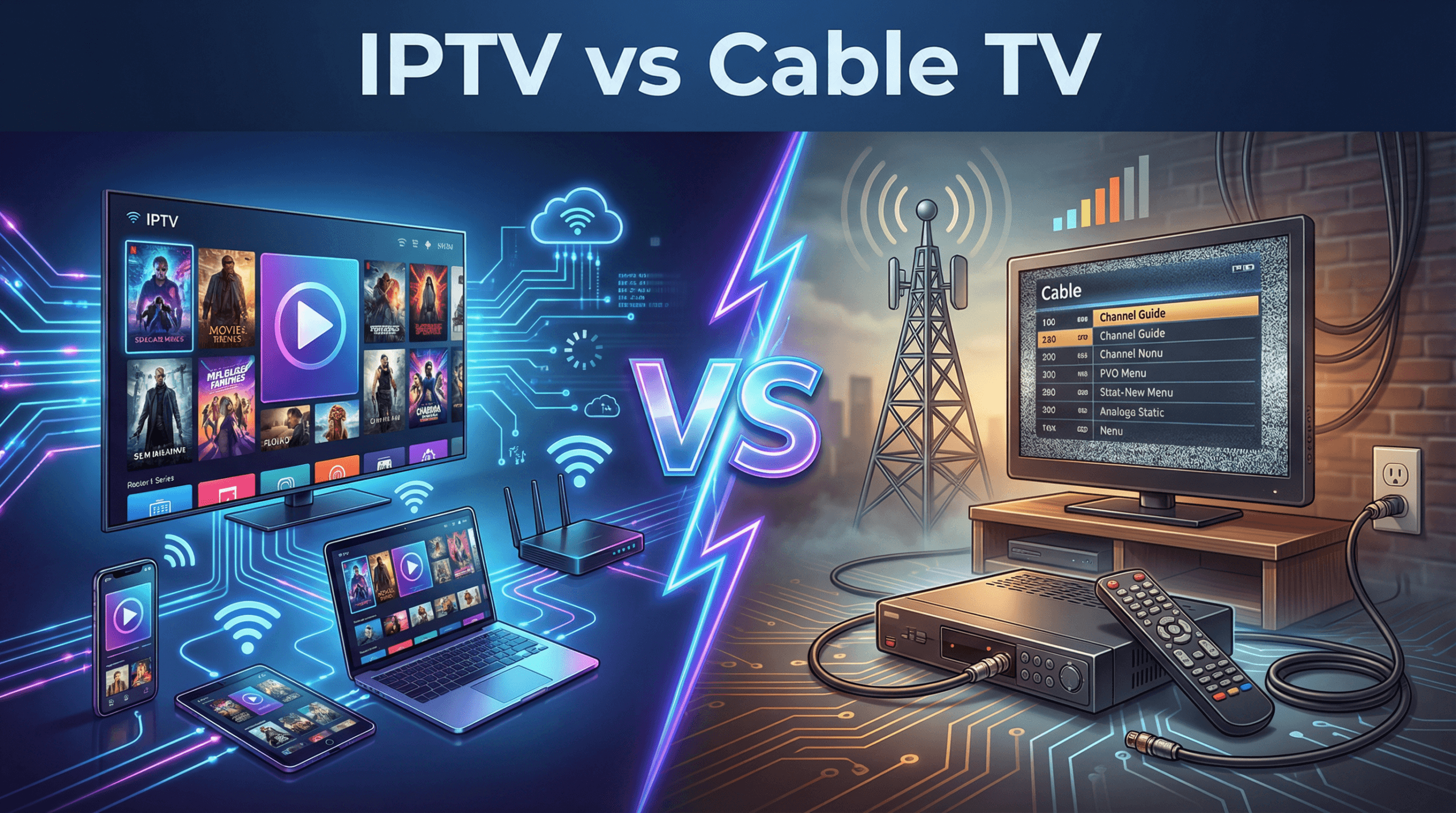
The world of television is constantly evolving, and the debate of IPTV vs Cable TV is more relevant than ever in 2026. While traditional cable has been a household staple for decades, Internet Protocol Television (IPTV) has emerged as a powerful contender, offering greater flexibility and a more personalized viewing experience. If you're looking to cut the cord or simply want to understand your options, this guide will break down the essential differences between these two technologies.
This comprehensive comparison will explore the core distinctions between IPTV and Cable TV, from their underlying technology and pricing structures to content availability and overall user experience. By the end, you'll have a clear understanding of which service is the right fit for your entertainment needs.
Key Differences: IPTV vs Cable TV
To get a quick overview, here is a summary of the fundamental differences between IPTV and Cable TV:
| Feature | IPTV (Internet Protocol Television) | Cable TV |
|---|---|---|
| Technology | Internet Protocol streaming | Coaxial/fiber-optic cable transmission |
| Installation | Minimal setup, often app-based | Professional installation required |
| Price Range | $15 - $80/month | $50 - $150/month |
| Internet Dependency | Requires a stable broadband connection | Independent of the internet |
| Device Compatibility | Multiple devices (TV, phone, tablet, laptop) | Primarily TV with a set-top box |
| Content Flexibility | On-demand, customizable packages | Fixed channel bundles |
| Picture Quality | Up to 4K (dependent on internet & device) | HD standard, with limited 4K options |
| Mobility | Watch anywhere with an internet connection | Location-specific |
What is IPTV?
IPTV stands for Internet Protocol Television, and it represents a modern approach to content delivery. Instead of receiving broadcast signals through a physical cable, IPTV streams television content directly through your existing internet connection. This allows for a more interactive and personalized experience, similar to popular streaming services like Netflix or Hulu.
Advantages of IPTV
- Cost-Effective Customization: IPTV services often offer flexible and affordable pricing, allowing you to choose the content you want without paying for bundled channels you don't watch.
- Multi-Device Flexibility: You can watch content on a wide range of devices, including smart TVs, smartphones, tablets, and computers.
- Interactive Features: IPTV offers features like pausing, rewinding, and fast-forwarding live TV, giving you more control over your viewing experience.
- Superior Picture Quality: With a strong internet connection, IPTV can deliver stunning 4K resolution and high-quality audio.
Disadvantages of IPTV
- Internet Dependency: A stable, high-speed internet connection is crucial for a smooth viewing experience. Poor bandwidth can lead to buffering and reduced quality.
- Service Reliability: The quality of service can vary between providers, and some may be less reliable than traditional cable.
What is Cable TV?
Cable TV is the traditional method of television delivery, using a network of physical coaxial or fiber-optic cables to transmit signals from a provider to your home. It has been the dominant force in home entertainment for decades, known for its reliability and straightforward user experience.
Advantages of Cable TV
- Unwavering Reliability: Because it doesn't rely on your internet connection, Cable TV offers a stable and consistent signal, free from buffering issues.
- Simplified User Experience: The familiar interface of a set-top box and remote control is easy to use for all ages.
- Comprehensive Channel Packages: Cable providers offer extensive channel bundles that include local stations, national networks, and premium content.
Disadvantages of Cable TV
- Higher Overall Costs: Cable TV is generally more expensive than IPTV, with prices often exceeding $100 per month for comprehensive packages.
- Limited Flexibility: Customers are often locked into fixed channel bundles, paying for many channels they may not watch.
- Geographic Limitations: Your service is tied to a physical location, meaning you can't take your subscription with you when you travel.
Detailed Comparison: IPTV vs Cable TV
Technology and Infrastructure
The most significant difference in the IPTV vs Cable TV debate lies in their core technology. IPTV leverages the power of the internet, delivering content through the same infrastructure you use for browsing and streaming. This allows for greater efficiency and flexibility. In contrast, Cable TV relies on a dedicated, physical network of cables, which provides a stable but less adaptable infrastructure.
Cost and Pricing
When it comes to cost, IPTV generally offers a more budget-friendly solution. With plans starting as low as $15 per month, IPTV providers offer a more competitive price point than cable, which often starts at $50 or more. Furthermore, IPTV services often eliminate hidden fees for equipment rental and installation, providing a more transparent pricing structure.
Content and Channel Availability
Both services offer a wide range of content, but they do so in different ways. Cable TV provides comprehensive, pre-set channel packages, which are great for users who want a wide variety of programming without having to make too many choices. IPTV, on the other hand, offers more customizable packages and extensive on-demand libraries, allowing you to tailor your subscription to your specific interests.
Picture and Audio Quality
Both IPTV and Cable TV can deliver high-definition picture quality. However, IPTV has the edge when it comes to 4K content. With a fast and stable internet connection, IPTV can provide a superior viewing experience with ultra-high-definition resolution. Cable TV is more limited in its 4K offerings, though it provides a consistently stable HD picture.
Reliability and Performance
Reliability is where Cable TV traditionally shines. Its dedicated infrastructure ensures a consistent signal that is not affected by internet congestion. This makes it an excellent choice for viewers who prioritize uninterrupted access to live events and news. IPTV's performance is directly tied to the quality of your internet connection, which can sometimes lead to buffering or service interruptions.
Who is Each Best Suited For?
- Choose IPTV if: You are a cord-cutter looking for a flexible, affordable, and customizable television experience. You value the ability to watch content on multiple devices and want access to a vast on-demand library.
- Choose Cable TV if: You prioritize reliability and a simple, traditional user experience. You want a comprehensive channel package with local stations and don't mind paying a premium for a stable, consistent service.
The Future of TV
The trend is clear: the future of television is moving towards internet-based delivery. As internet infrastructure continues to improve and expand, IPTV is poised to become the dominant force in home entertainment. While Cable TV will likely remain a viable option for some time, its rigid structure and higher costs will make it increasingly difficult to compete with the flexibility and affordability of IPTV.
Conclusion
The IPTV vs Cable TV decision ultimately comes down to your personal preferences and priorities. If you value flexibility, customization, and affordability, IPTV is the clear winner. If you prioritize reliability and a traditional viewing experience, Cable TV may still be the right choice for you. As technology continues to advance, the lines between these two services will likely blur, but for now, understanding their key differences is essential for making an informed decision.